5 Masking Tape Mistakes Ruining Your Paint Job!
For professional automotive painters, construction contractors, and procurement managers in industrial manufacturing, a perfect finish is non-negotiable.
There is nothing more costly than peeling back tape only to find jagged, bled lines or sticky residue left behind. Rectifying these mistakes requires extra labor, re-sanding, and wasted materials—all of which drain your project’s profitability.
Often, these issues stem from systemic sourcing and application errors. As a leading masking tape manufacturer, we see these mistakes frequently. Here are the 5 most common missteps made during the masking process, along with direct solutions to ensure a sharp paint line every time.
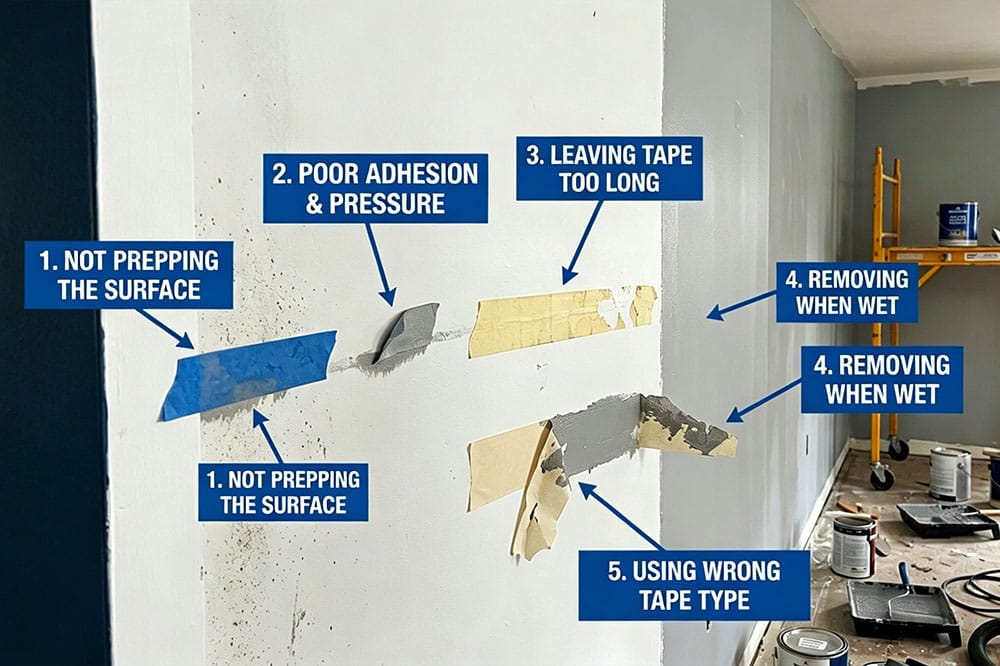
1.Using General Grades for Thermal Application.
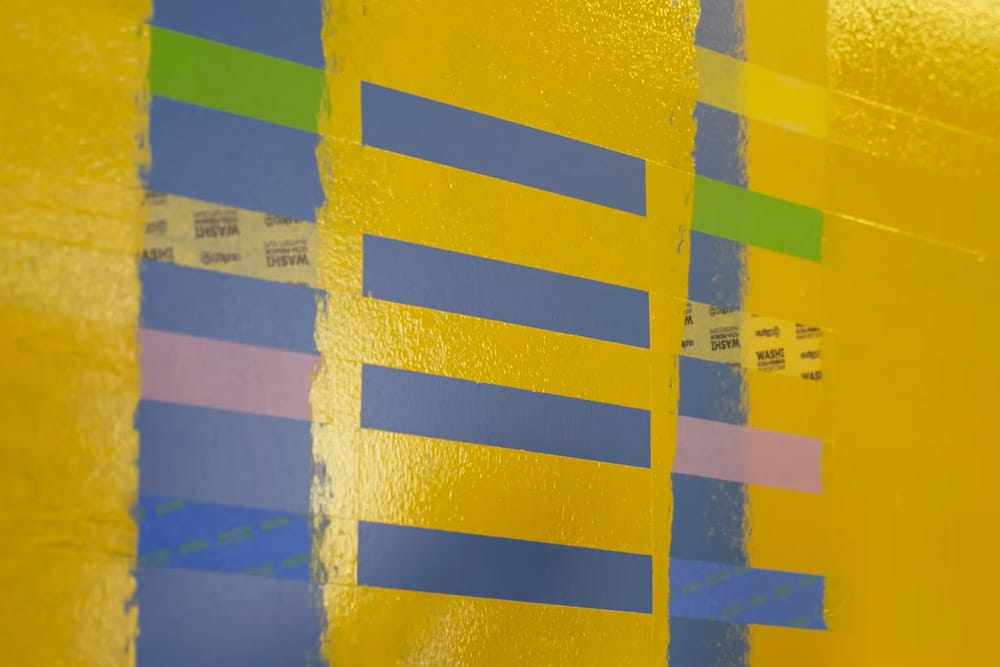
One of the most catastrophic mistakes in automotive refinishing or powder coating is using standard, everyday paper tapes under heat lamps or bake ovens.
Standard adhesive formulations break down rapidly when exposed to elevated temperatures. When the bond degrades under heat, the tape lifts—causing massive paint bleeding—or bakes into the substrate, leaving a stubborn residue that requires heavy solvents to remove.
The Solution: For industrial manufacturing and spray booths, you must source a certified high temperature masking tape. These specialty products are specifically cross-linked to withstand baking cycles up to 120°C (248°F) or 150°C (302°F) while ensuring a clean removal masking tape performance after the baking cycle finishes.
2.Neglecting Substrate Preparation Before Layout.
Even top-notch industrial masking tape will not stick if used on a dirty surface. Dust, moisture, residual oils or chemicals from cleaning agents form a microlayer between the pressure-sensitive adhesive and the substrate.
The result: without good contact with the surface, paint primers etc have poor initial tack and low viscosity liquids can flow right under the edge of the tape.
The answer: clean the surface well with either a volatile solvent-based or specialized water-based cleaner, and make sure it’s 100% dry and free of dust when you do the layout.
3.Applying Inadequate Pressure During Placement.
Masking tape uses a pressure sensitive adhesive (PSA). Just laying down the tape on a surface isn’t going to make the polymer chains bond together and make a viable seal. If you don’t flatten the edges, you are left with small holes in the creped texture that act like micro-channels that pull paint underneath by capillary action.
The hack: when the tape is in place, use a rubber squeegee, tape applicator, or a hard swipe with your thumb along the all-important paint-side edge. An airtight seal from a reputable crepe paper tape manufacturer allows the adhesive to seep into the micro-grooves of the surface and prevent paint bleeding.
4.Keeping the Tape on past the Removal Window.
Leaving the tape applied on the surface beyond its expiration date enables the adhesive to still cross-link and cure on the substrate, making its bond strength increase to an extreme with time.
The Solution: Double-check with your engineering team that you have the exact clean removal times for your product for the official packaging tape TDS. If you are delayed in your project, it is much cheaper to remove your mask and replace it, than it is to scrape baked on gunk later on.
5.Failing to Match Widths to Complex Geometry.
Using a single standard width for every aspect of a project often leads to failure. In automotive body lines or intricate industrial parts, overly wide tapes will buckle or wrinkle around curves, creating instant pathways for paint migration.
The Solution: Source your materials from a vendor that offers custom width masking tape options. Utilizing precise widths (such as 15mm or 18mm for tight curves, and 48mm for wide surface masking) ensures a smooth lay-down without edge lifting.
Sourcing for Scale: Partner with a Reliable Manufacturer.
Resolving paint bleeding and residue issues long-term requires both proper technique and strict product consistency. For international distributors and large-scale industrial operations, sourcing unbranded or retail-grade tapes presents high quality-control risks. Securing a steady bulk supply paper tape with uniform adhesive coating thickness is the only way to safeguard your production lines.
Streamline Your Supply Chain with Krytape.
If you are looking to source premium, high-volume masking solutions, Krytape is your ideal manufacturing partner. We specialize in producing elite automotive masking tape wholesale options and industrial surface-protection tapes that guarantee a sharp edge without residue.
- Factory Scale: Our state-of-the-art facilities deliver a massive daily output of 150,000 rolls, ensuring stable lead times for your wholesale masking tape contracts.
- Certified Innovation: Backed by 3 national patents and rigorous lab testing, our tapes are built for demanding global environments.
- Global Footprint: We are a trusted partner serving over 50 global customers across North America, Europe, and Southeast Asia.