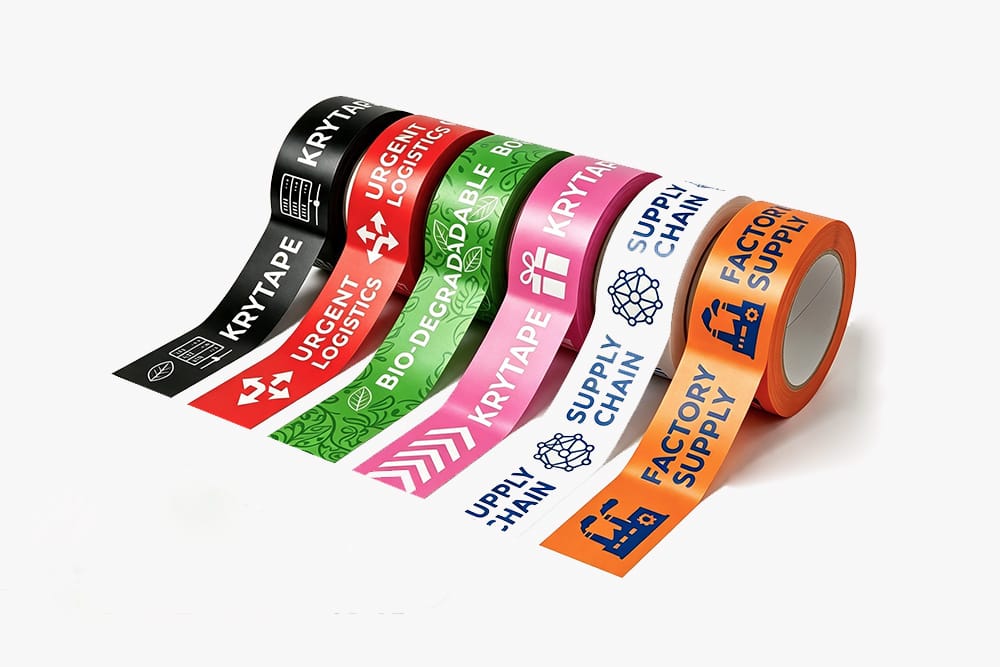
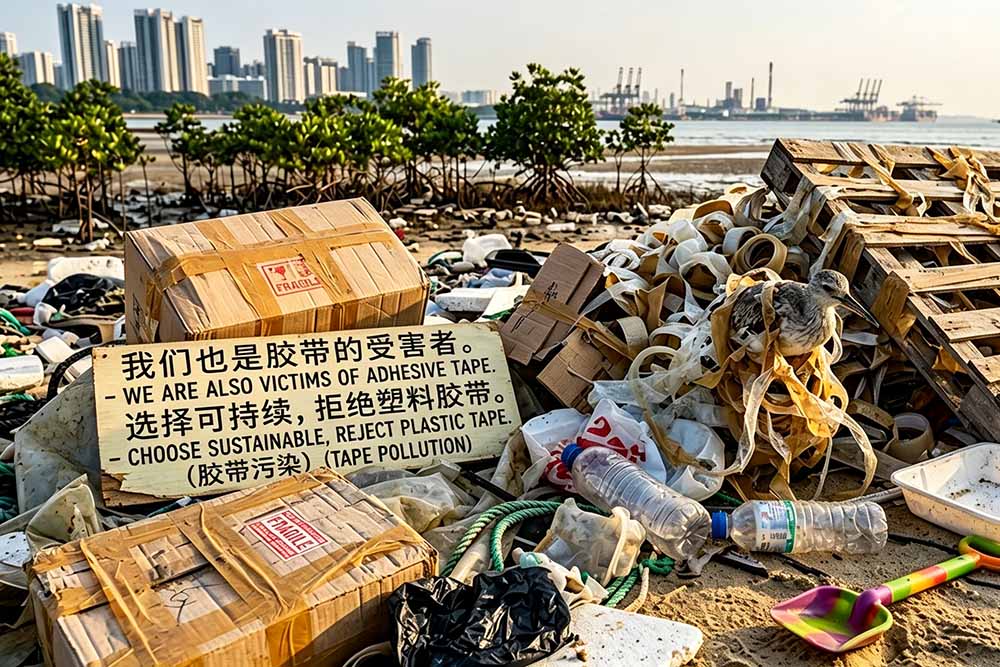
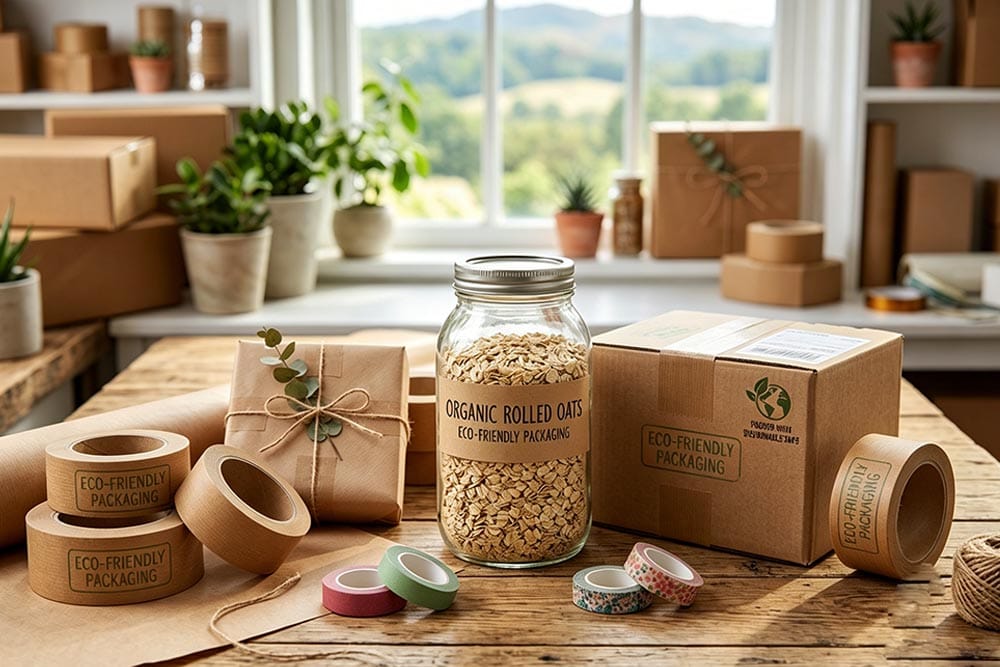
The global packaging industry is moving from a traditional focus on low cost toward a more balanced approach that considers cost, performance, sustainability, and regulatory requirements. Exporters and packaging companies are increasingly considering the recyclability, composition, and environmental impact of packaging materials as packaging regulations and extended producer responsibility (EPR) requirements evolve in Europe and the USA.
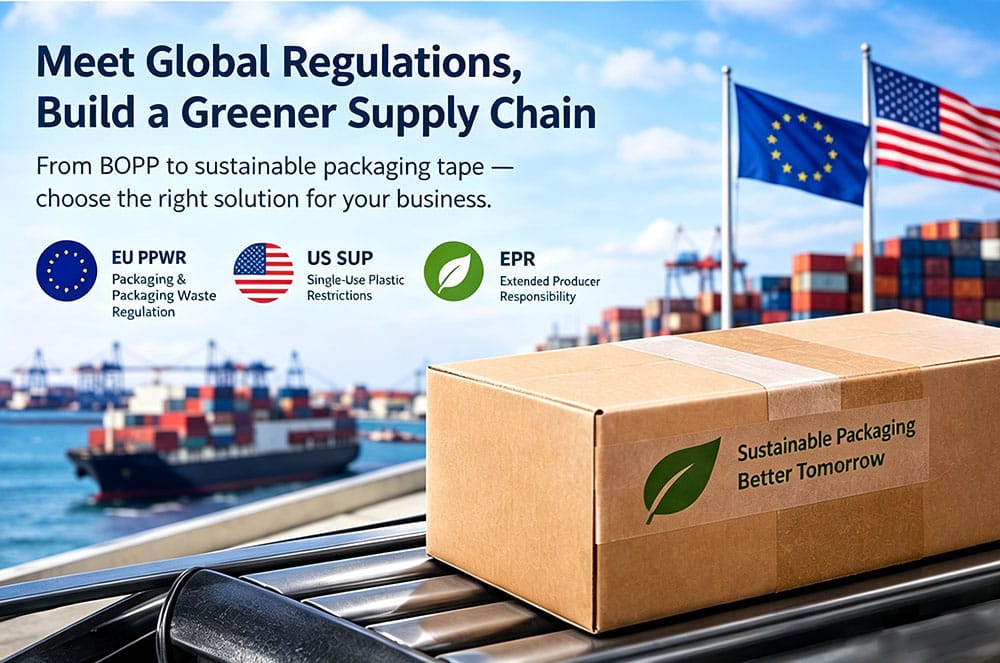
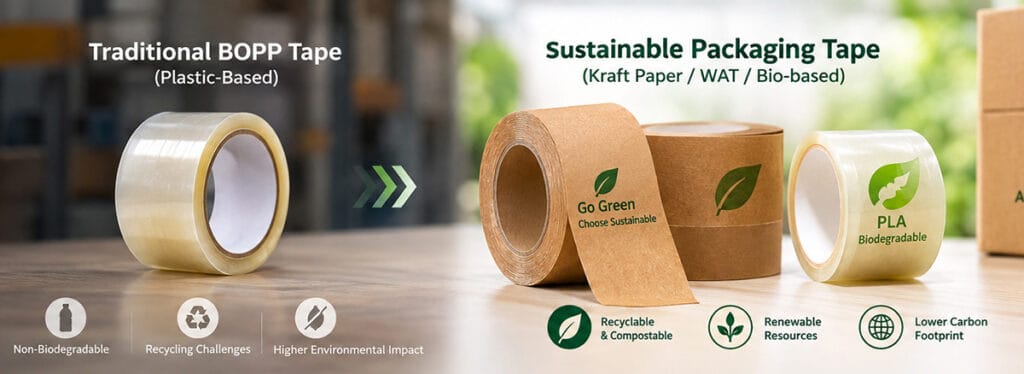
As one of the most widely used packaging consumables, packaging tape is also undergoing a material transition. Conventional BOPP packing tape has been favored for its high tensile strength, transparency, stable quality and reasonable price. But, enterprises with the goal of decreasing plastic consumption, enhancing packaging sustainability,or meet customer requirements for more environmentally responsible packaging are increasingly evaluating kraft paper tape, water-activated tape (WAT), reinforced kraft tape, and selected bio-based packaging tapes.
A good changeover is not just swapping out the BOPP tape for a paper tape solution. Manufacturers should consider the whole packaging system, such as substrate, adhesive, application, packaging machinery, tape usage, and overall cost ownership.
1. Why Are Traditional BOPP and PVC Packaging Tapes Facing More Environmental Pressure?
BOPP packing tape is a popular choice for carton sealing in e-commerce, logistics, manufacturing, and export packaging, due to its good tensile strength, transparency, flexibility, and processing performance.
PVC tape is also used in a variety of packaging and industrial applications, due to its flexibility and adhesive performance. But plastic-based packaging materials are gaining prominence as governments, brands and consumers seek to reduce packaging waste and increase recycling.
It should be noted that European and US regulations are not just Universal bans of all plastic packaging tapes. Requirements vary by country, region, state, packaging application, and recycling system.
For exporters, the more practical question is:
How can companies reduce their dependence on plastic-based packaging materials while preparing their packaging systems for future sustainability requirements?
This is one of the reasons why sustainable packaging tape, kraft paper packing tape, and water-activated tape are becoming increasingly important alternatives.
2. What Are the Main Sustainable Alternatives to BOPP Packing Tape?
Companies evaluating eco-friendly packaging tape can choose from several different material technologies depending on their packaging requirements.
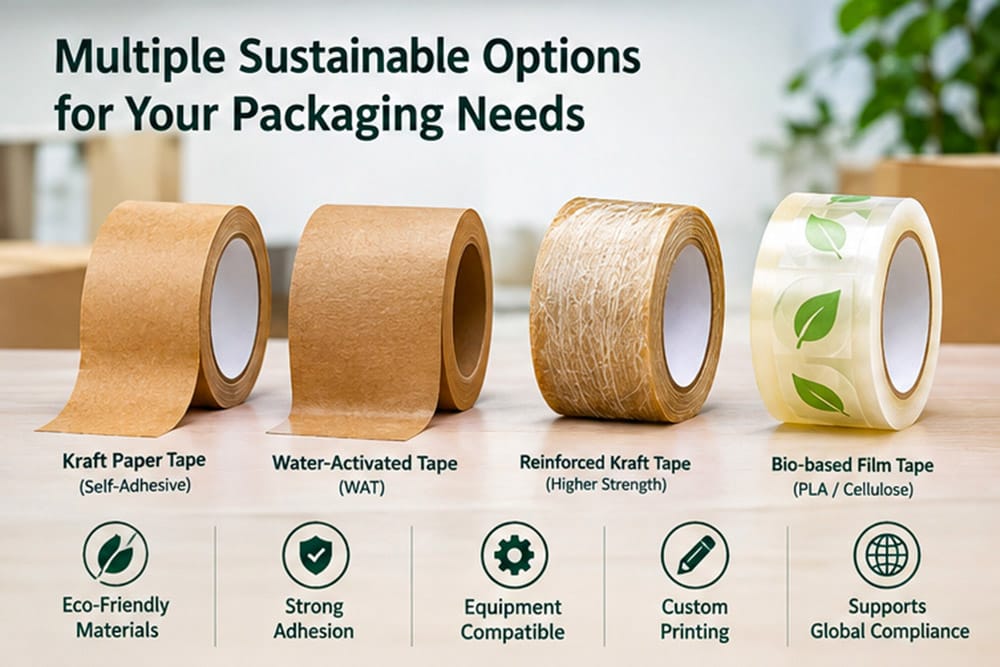
2.1 Self-Adhesive Kraft Paper Tape
Self-Adhesive Kraft Paper Tape is composed of kraft paper as the substrate and an acrylic pressure sensitive adhesive system.
It is applied in the same way as traditional pressure sensitive packing tape, so there is no need for additional water-activating equipment.
This makes it a good choice for businesses that are interested in adding more sustainable packaging tape to their packaging line, but don’t want to make a large change to their existing process.
Key benefits include:
- Kraft paper backing
- Easy application
- Suitable for standard carton sealing
- Custom logo and brand printing
- Suitable for e-commerce and warehouse packaging
- Multiple adhesive options for different applications
For companies making their first transition from plastic tape to paper-based packaging tape, self-adhesive kraft tape can be a practical starting point.
2.2 Water-Activated Tape (WAT)
Water-Activated Tape, WAT Tape for short, is also one of the best paper-based carton sealing products.
Commercial water-activated tape generally consists of kraft paper as a backing with a water-activated adhesive coating. When applied, moisture activates the adhesive and bonds the tape to the corrugate.
Water-activated tape, in comparison to traditional pressure-sensitive tapes, can achieve strong adhesion to paper based cartons and is increasingly being considered for packaging systems where compatibility with carton recycling is a key factor.
Typical applications include:
- E-commerce cartons
- Export packaging
- Automated carton sealing
- High-value product packaging
- Tamper-evident packaging
- Paper-based packaging systems
One important consideration is equipment compatibility. Depending on the product, WAT tape may require a water-activated tape dispenser or automated gummed tape machine.
Therefore, companies should evaluate both the tape and the packaging equipment before switching to WAT.
2.3 Reinforced Kraft Paper Tape
When it comes to heavy packaging, standard Kraft paper tape may not offer enough tensile strength and tear resistance.
Reinforced Kraft Paper Tape can be reinforced with fiberglass, synthetic fibers or other reinforcement systems for higher tensile strength and tear resistance.
It can be used for:
- Heavy-duty cartons
- Industrial packaging
- Export shipments
- Multi-wall corrugated boxes
- Heavy products
- Applications requiring high carton sealing strength
For packaging applications where BOPP tape is primarily selected for its mechanical strength, reinforced kraft tape can be an effective alternative worth evaluating.
2.4 Bio-Based and Biodegradable Film Tape
For applications requiring transparency, flexibility, or specific sustainability characteristics, companies can also evaluate bio-based packaging tape and certain biodegradable film tapes.
Possible material technologies were PLA, cellulose films, and other bio-based materials.
But companies need to be clear on the fact that bio-based, biodegradable, compostable and recyclable are all different environmental claims. – and a lot of people get them mixed up.
The right approach should be chosen based on target market, packaging system, relevant standards, certification schemes and real end-of-life situation.
3. What Is the Difference Between Recyclable, Bio-Based, Biodegradable, and Compostable Tape?
One of the most common challenges in sustainable packaging is understanding environmental terminology.
| Term | Basic Meaning | What Buyers Should Check |
|---|---|---|
|
Recyclable
Eco Tape Terminology / Krytape | Can enter an appropriate recycling system | Local recycling infrastructure and material compatibility |
|
Bio-Based
Eco Tape Terminology / Krytape | Made partly or entirely from biological sources | Bio-based content and certification |
|
Biodegradable
Eco Tape Terminology / Krytape | Can be biologically broken down under specified conditions | Environment, conditions, and degradation testing |
|
Compostable
Eco Tape Terminology / Krytape | Can break down under defined composting conditions | Applicable composting standards and facilities |
Therefore, a tape composed at least in part of renewable materials is not necessarily biodegradable in all environments.
In the same way, you should not describe a paper-based tape as being recyclable in all environments without taking into account the type of adhesive, the construction, the carton system and the recycling process at the destination.
For buyers of B2B packaging tape, green claims should always be scrutinized in the light of the actual product specification and the needs of its target market.
4. Can Kraft Paper Tape Really Replace BOPP Packing Tape?
There isn’t one size that fits all for each and every packaging job.
The right solution depends on:
carton type + product weight + transportation conditions + packaging equipment + tape construction + adhesive performance.
For example:
- Standard e-commerce cartons can often be evaluated with self-adhesive kraft paper tape.
- Applications requiring strong bonding to paper cartons can consider water-activated tape.
- Heavy-duty cartons may require reinforced kraft paper tape.
- Applications requiring transparency or specific film properties may require bio-based film tape or other specialized solutions.
BOPP vs. Sustainable Paper-Based Packaging Tape
| Feature | BOPP Packing Tape | Kraft Paper Tape | Water-Activated Tape | Reinforced Kraft Tape |
|---|---|---|---|---|
|
Backing
Substrate Material | PP Film | Kraft Paper | Kraft Paper | Kraft + Reinforcement |
|
Transparency
Optical Clarity | High | Low | Low | Low |
|
Tensile Strength
Load Bearing | High | Medium | Medium | High |
|
Paper-Based
Eco Composition | No | Yes | Yes | Yes |
|
Application
Adhesive Activation | Pressure-sensitive | Pressure-sensitive | Water activated | Depends on product |
|
Automation
Machine Sealing | Excellent | Available | Requires compatible equipment | Available |
|
Heavy-Duty Packaging
Carton Weight Capacity | Good | Application dependent | Application dependent | Excellent |
|
Custom Printing
Brand Customization | Available | Available | Available | Available |
|
Sustainable Packaging Positioning
Environmental Impact | Standard | Stronger | Stronger | Stronger |
The objective is therefore not to determine whether one material is universally better than another.
The objective is to identify the best packaging tape solution for a specific application.
5. What Are the Biggest Challenges When Switching from BOPP to Sustainable Tape?
Although demand for sustainable packaging tape is increasing, companies still need to address several practical challenges when replacing traditional plastic tape.
5.1 Raw Material Cost
High-quality kraft paper, specialized adhesives, reinforcement materials, and alternative film substrates can result in higher material costs.
If companies compare only the purchase price of each roll, eco-friendly packaging tape may appear more expensive than conventional BOPP tape.
However, packaging costs should be evaluated through Total Cost of Ownership (TCO).
5.2 Adhesion and Mechanical Performance
Different cartons, corrugated boards, and transportation environments require different tape specifications.
Important performance factors include:
- Initial Tack
- Peel Adhesion
- Tensile Strength
- Elongation
- Shear Strength
- Temperature Resistance
- Moisture Resistance
- Carton Surface Compatibility
High humidity, low temperatures, high temperatures, long-distance transportation, and ocean freight can all affect packaging tape performance.
Therefore, companies should select tape based on actual packaging conditions rather than environmental claims alone.
5.3 Packaging Equipment Compatibility
Standard BOPP packing tape can be used with a wide range of conventional carton sealing equipment.
By comparison, water-activated tape requires compatible dispensing or automated gummed tape equipment.
When transitioning from BOPP to WAT, companies should evaluate:
- Equipment investment
- Packaging speed
- Labor requirements
- Tape width
- Tape roll length
- Carton specifications
- Automation compatibility
Sustainable packaging should be evaluated as part of the entire packaging process.
6. How Can Companies Reduce the Total Cost of Sustainable Packaging Tape?
The goal of sustainable packaging tape is not simply to purchase the cheapest roll.
The goal is to make every meter of tape deliver greater packaging value.
6.1 Optimize Tape Consumption
In conventional packaging operations, workers may use overlapping strips, multiple sealing passes, or additional tape to increase carton security.
If the selected tape provides suitable adhesion and tensile strength, companies can optimize the sealing pattern according to carton size, product weight, and transportation requirements.
This means that:
Reducing tape consumption can sometimes be more valuable than reducing the price per roll.
The actual reduction should always be determined through application testing rather than assuming a fixed percentage for every packaging operation.
6.2 Match Tape Construction to Product Weight
Not every carton requires heavy-duty tape.
For lightweight e-commerce packaging, kraft paper packing tape may be sufficient.
For medium and heavier cartons, higher-strength paper-based tape can be considered.
For light to medium duty double wall corrugated packaging reinforced kraft tape might be the better option in terms of paper based construction and mechanical strength.
Specifying the amquisite tape type can prevent over packaging and waste of materials.
6.3 Use Custom Printed Kraft Tape
Custom Printed Kraft Tape can combine carton sealing with brand communication.
Companies can print:
- Logo
- Brand Name
- Website
- Recycling Messages
- Handling Instructions
- Sustainability Messages
This turns packaging tape into a functional branding element while potentially reducing the need for additional packaging graphics.
6.4 Evaluate TCO Instead of Roll Price
A useful way to evaluate sustainable packaging tape is to consider:
Total Packaging Cost = Tape + Labor + Equipment + Waste + Damage + Compliance Risk
If an eco-friendly packaging tape solution has a higher purchase price but helps:
- Reduce tape consumption
- Reduce repeated sealing
- Improve packaging efficiency
- Reduce packaging waste
- Improve carton compatibility
- Meet customer sustainability requirements
then the overall TCO may be more competitive than the initial roll price suggests.
7. Which Sustainable Packaging Tape Should You Choose for Different Applications?
There is no universal eco-friendly packaging tape for every packaging requirement.
| Packaging Application | Recommended Direction |
|---|---|
|
Standard e-commerce cartons
Retail Packaging / Krytape | Self-Adhesive Kraft Tape |
|
Parcel and shipping cartons
Logistics & Freight / Krytape | Kraft Paper Packing Tape |
|
Branded e-commerce packaging
Custom Branding / Krytape | Custom Printed Kraft Tape |
|
Paper recycling-focused applications
Eco Recycling / Krytape | Water-Activated Tape |
|
Heavy-duty cartons
High Tensile / Krytape | Reinforced Kraft Tape |
|
Industrial export packaging
Cross-Border Shipping / Krytape | Heavy-Duty / Reinforced Kraft Tape |
|
Automated carton sealing
Packaging Automation / Krytape | Machine-Compatible Kraft Tape / WAT |
|
Specific sustainability requirements
Green Solution / Krytape | Bio-Based / Compostable Film Tape |
Packaging buyers should identify the application first and then select the appropriate tape construction.
8. Sustainable Tape Is More Than Simply Replacing the Backing Material
A real sustainable packaging tape solution involves more than changing BOPP film to kraft paper.
Substrate Selection
Packaging manufacturers can evaluate kraft paper, recycled paper, bio-based films, and other alternative substrates depending on the application.
Adhesive Technology
Different applications may require water-based adhesives, starch-based adhesives, natural rubber systems, or other adhesive technologies.
Coating Optimization
Precise adhesive coating can help balance bonding performance with material efficiency.
Packaging Materials
The environmental impact of the tape itself should also be considered together with the packaging used to protect and ship the tape.
Manufacturing and Supply Chain
Stable manufacturing, quality control, and batch-to-batch consistency are equally important for B2B customers.
A successful material trial does not automatically guarantee stable mass production.
For global buyers, the key question is:
Can the manufacturer consistently deliver the same tape performance at commercial production volumes?
9. How Should You Choose an Eco-Friendly Packaging Tape Manufacturer?
When transitioning from traditional BOPP tape to sustainable packaging tape, selecting the right manufacturer is critical.
B2B buyers should evaluate:
1. Material Selection
Can the manufacturer provide different kraft paper grades, reinforcement structures, and alternative substrates?
2. Adhesive Technology
Can the supplier develop adhesive solutions for different cartons, surfaces, temperatures, and transportation conditions?
3. Custom Manufacturing
Can the factory provide customized width, length, thickness, adhesive performance, and roll specifications?
4. Custom Printing
Can the manufacturer produce custom printed kraft tape with logos, graphics, and brand messages?
5. Machine Compatibility
Can the supplier develop machine-grade packaging tape for automated packaging lines?
6. Reinforced Tape Capability
Can the manufacturer produce reinforced kraft paper tape for heavy-duty applications?
7. Quality Control
Does the factory have reliable quality-control procedures and batch consistency?
8. OEM / ODM Support
Can the manufacturer develop customized tape according to specific packaging requirements rather than only selling standard products?
10. KRYTAPE: B2B Packaging Tape Manufacturing and Custom Solutions
KRYTAPE focuses on B2B packaging tape manufacturing and customized adhesive tape solutions for global customers.
Our product range includes:
- BOPP Packing Tape
- Kraft Paper Tape
- Water-Activated Tape
- Reinforced Tape
- Low Noise Packing Tape
- Machine Grade Tape
- Custom Printed Tape
- Specialty Adhesive Tape
For companies transitioning toward more sustainable packaging, KRYTAPE can support the evaluation of different tape solutions based on carton type, product weight, transportation conditions, packaging equipment, and branding requirements.
Instead of asking only:
“How much does eco-friendly packaging tape cost?”
B2B buyers should also ask:
“Which packaging tape can deliver the right performance and sustainability characteristics at a competitive total cost of ownership?”
This approach helps companies make a more practical and long-term packaging decision.
11. FAQ: Sustainable and Eco-Friendly Packaging Tape
Q:Is kraft paper tape better than BOPP tape?
A:Neither material is universally better for every application. BOPP packing tape provides excellent transparency, tensile strength, and cost efficiency, while kraft paper tape can be a better option for paper-based packaging systems and companies seeking more sustainable packaging solutions.
Q:Is kraft paper tape recyclable?
A:Many paper-based tapes can offer good compatibility with paper-based packaging recycling systems. However the true ability to recycle depends on the adhesive, how the tape is built the carton system and the local recycling process.
Q:What is water-activated tape?
A:Water-Activated Tape (WAT) is a paper‑based packaging tape that has a layer that activates when it comes into contact with water. Water-Activated Tape is commonly used to seal cartons and can be applied either by hand or with equipment that’s compatible with automated use. From my experience Water-Activated Tape offers an option, for everyday packing tasks.
Q:Is biodegradable tape the same as recyclable tape?
A:No. Biodegradable tape refers to a material’s ability to break down biologically under specified conditions, while recyclable tape refers to its ability to enter an appropriate recycling system. These are different environmental characteristics.
Q:Can kraft paper tape be used for automatic packaging?
A:Yes, depending on the tape construction and packaging equipment. Companies using automated packaging lines should select a machine-compatible kraft paper tape or suitable WAT product and conduct equipment compatibility testing.
Q:Is eco-friendly packaging tape more expensive?
A:The purchase price of eco- packaging tape can be higher than some conventional BOPP tapes. However companies should evaluate tape consumption, labor, equipment, packaging waste, damage and customer sustainability requirements as part of the Total Cost of Ownership (TCO).
Q:What is the best alternative to BOPP packing tape?
A:The purchase price of eco- packaging tape can be higher than some conventional BOPP tapes. However companies should evaluate tape consumption, labor, equipment, packaging waste, damage and customer sustainability requirements as part of the Total Cost of Ownership (TCO).
The best choice depends on the carton, product weight, transportation conditions, equipment and required performance.
Conclusion: From Plastic Tape Replacement to Sustainable Packaging Solutions
More and more places like Europe and the United States are setting rules, about the environment. Because of this packaging companies are starting to think about the plastic-based materials they’ve been using for years.
If a company is thinking about switching from packing tape or PVC tape to kraft paper tape, water-activated tape, reinforced kraft tape or other eco-friendly tape options they should remember this: it’s not just about swapping one material for another. The real goal is to make a change that helps the planet.
A successful transition requires a complete approach:
Choose the right material → optimize adhesive performance → match packaging equipment → reduce tape consumption → control TCO → meet target-market requirements.
The future of packaging tape will not be determined simply by which tape is the “greenest.”
Instead, successful packaging solutions will need to balance:
Sustainability + Performance + Cost + Supply Stability + Customization
For companies searching for an eco-friendly packaging tape manufacturer, kraft paper tape supplier, water-activated tape manufacturer, or custom printed kraft tape supplier, choosing a manufacturer with material development, customization, quality control, and stable mass-production capabilities can be an important step toward building a more sustainable packaging supply chain.
KRYTAPE continues to develop B2B packaging tape solutions that help companies balance performance, cost, customization, and sustainable packaging requirements.
Looking for Custom Printed Tape Wholesale Quotes?
Get direct factory pricing, free digital mockups, and low MOQs for your business today.
Request a Free Quote & Sample →