






Stretch film plays an important role in packaging for manufacturers, warehouses, logistics companies, and distribution centers. It stretches around goods and then tightens as it returns to its original shape, helping hold cartons together, steady pallet loads, and protect products in storage or transit.
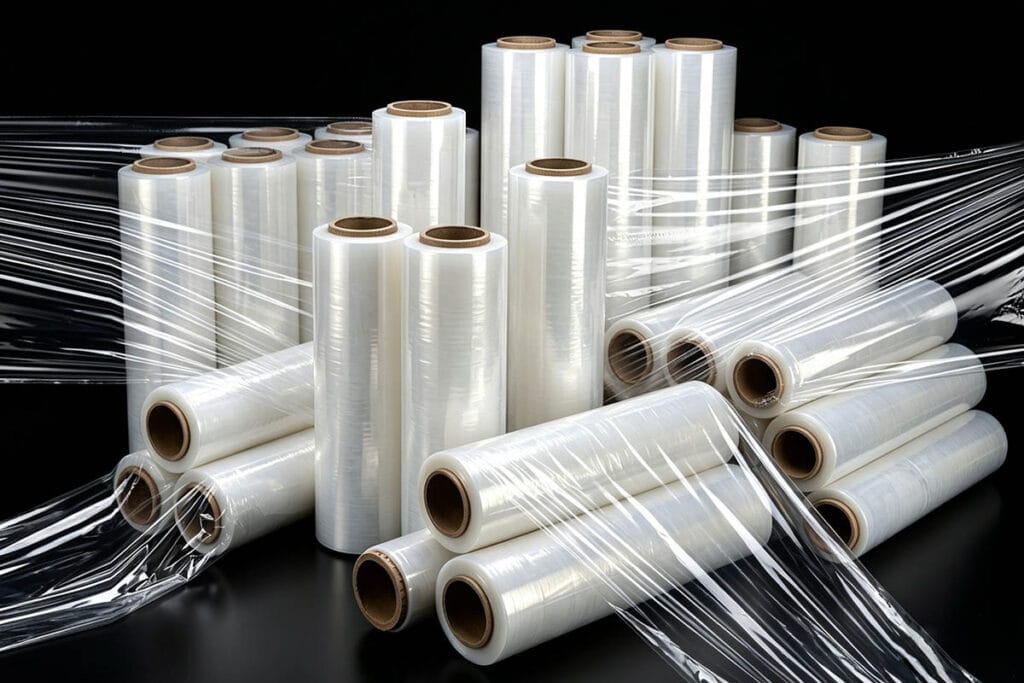
For companies buying packaging supplies in volume, the right film can help keep loads secure, limit excess material use, and make shipping more efficient.
KRYTAPE, the packaging-materials brand of Dongguan Krystar New Material Co., Ltd., serves business customers with a range of packaging solutions. This guide covers how stretch wrap works, the types commonly used, where it is applied, and what to look for when choosing a supplier.
1. What Is Stretch Film?
Stretch film, also known as stretch wrap, pallet wrap, or PE stretch film, is a flexible plastic film commonly made from polyethylene. Linear low-density polyethylene (LLDPE) is often favored for its good balance between stretchability, toughness and load retention.
The film is stretched and wrapped around cartons, products, or pallets, and the tension produced holds the items together. Its cling property causes the layers of film to stick to each other, which is useful because it helps keep the package secure while it is being handled and transported.
Stretch film is widely used in:
- Pallet wrapping and load stabilization
- Warehouse storage and inventory handling
- E-commerce fulfillment and distribution
- Industrial product packaging
- Export shipping and container loading
- Food and beverage logistics at the secondary-packaging level
In contrast to adhesive carton tape that seals carton flaps, stretch wrap (film) is mainly used to hold products together by wrapping them and applying tension.
2. Key Benefits of Stretch Wrap Film.
Strong Load Stabilization
Stretch wrap also helps carton and other packaged goods hold together on the pallet. Good wrapping can eliminate moving caused by forklift move, warehouse move and transportation.
Flexible and Adaptable Packaging
The film stretches around the load allowing for different load shapes and sizes so it can be used for different types of cartons, bundles and palletized goods.
Dust and Moisture Protection
As an extra layer, stretch film adds a second barrier to dust, dirt and incidental moisture. In addition, regular stretch film should not be treated as a waterproof or air-tight packaging material.
Improved Packaging Efficiency
Hand stretch film is designed for smaller scale and for packaging that is more manual in nature, while machine stretch film is designed for bigger operations and for packaging that takes place using stretch wrapping equipment.
Potential Material and Cost Savings
By choosing the right film gauge, amount of stretch, and method of wrapping, you can avoid excess usage. Thin film or cheapest roll isn’t always the best value or the highest performing product when run in your process.
3. What Materials Are Used in Stretch Film?
Polyethylene is the principal material used in many industrial stretch films.
LLDPE is a popular choice because it bends easily, resists punctures, and can stretch around a load while still holding it securely.
When choosing a stretch film supplier, buyers may want to assess:
- Stretchability: How much the film can extend under controlled conditions.
- Tensile strength: How well it withstands pulling.
- Puncture resistance: How effectively it stands up to sharp edges and corners.
- Cling performance: How firmly the layers stick to one another.
- Load retention: How well the wrap keeps a load secure over time.
- Thickness consistency: Whether the film performs evenly from one end of the roll to the other.
The right balance of these features depends on what is being wrapped, the load’s weight and shape, and the packaging equipment in use.
4. Types of Stretch Film.
Different packaging environments require different stretch film formats. The following are common options for B2B buyers.
4.1 Hand Stretch Film.
Hand stretch film is intended for void filling and bundling while working in manual. Users stretch the film by hand around cartons, packages or pallet cargo without the need of a machine.
Typical applications include:
- Small warehouses and distribution facilities
- E-commerce fulfillment operations
- Low- to medium-volume pallet wrapping
- Irregularly shaped products
- Businesses requiring flexible packaging operations
When choosing a hand stretch film, you need to take into account the weight of the roll, the width of the film, the thickness, how easy it is to handle and how much force the user will have to apply.
4.2 Machine Stretch Film.
Machine stretch film is intended for use on semi-automatic or automatic pallet wrapping machines.It is ideal for companies that wrap many pallets and require consistent packaging performance. Machine wrapping can increase output, optimize film consumption, and eliminate operator-to-operator inconsistencies, depending on the film and machine.
Key purchasing considerations include:
- Compatibility with the wrapping machine
- Pre-stretch capability and operating tension
- Film width and thickness
- Load weight and pallet dimensions
- Puncture resistance and load retention
- Required packaging speed
Before buying in large quantities, the machine stretch film should be tested on the equipment.
4.3 Clear Stretch Film.
Because clear stretch film lets labels and carton details show through, workers can identify packages without removing the wrap. It’s a practical choice for everyday use in warehouses, distribution centers, and export packing.
4.4 Colored Stretch Film.
Colored film can make it easier to sort goods by product type, storage area, or delivery destination. It also offers some visual coverage of the packaged items.Check with the supplier to find out which colors are available.
4.5 Mini Stretch Film.
Mini stretch film is designed for smaller wrapping jobs, such as bundling products, holding small parts together, or keeping items organized for storage and transport.It’s a handy option when standard pallet wrap would be too large or difficult to use.
5. Stretch Film vs. Shrink Film: What Is the Difference?
Stretch film and shrink film are both used in packaging, but they operate differently and serve different purposes.
| Fonctionnalité | Film étirable | Shrink Film |
|---|---|---|
| Working principle | Stretching and elastic recovery | Heat-induced shrinkage |
| Heating required | Non | Usually yes |
| Main function | Securing loads and pallets | Tight product wrapping and presentation |
| Common applications | Warehousing, logistics, pallet packaging | Retail multipacks, product bundles, gift packaging |
| Typical materials | PE, often LLDPE-based | PE, POF, PVC, depending on application |
Stretch wrap is typically chosen when the focus is on the bundling of products for handling, storage and transportation. Shrink wrap is usually the preferred choice when a close-fitting package or retail presentation is needed.
But they aren’t mutually substitutable in every use case. Customers need to choose the product based on their packaging needs and the end use equipment.
6. Common Applications of Industrial Stretch Film.
Warehousing and Logistics.
Stretch film helps consolidate cartons and stabilize palletized shipments. It is particularly useful in distribution centers where products are repeatedly moved between storage and shipping areas.
Manufacturing and Industrial Packaging.
Manufacturers utilize stretch film to hold finished goods, components, and packaged items before being moved to warehouses or shipped to customers.
E-Commerce and Distribution.
Stretch film can be used to stabilize multi-packs and reinforce outer packaging while being handled. It works well in conjunction with corrugated boxes, packing tape, and other shipping supplies.
Food and Beverage Distribution.
Stretch film is commonly employed to secure secondary packaging, such as cartons and palletized beverage products. Only certain types of stretch film are considered suitable for direct food contact applications, and only if the product has been specifically designed and verified for that use.
Export and Pallet Shipping.
Stretch film assists in securing pallet loads for international shipments during transit and handling. The right wrapping style and film performance are key to ensuring the load remains stable throughout the shipping process.
7. Why Does Stretch Film Tear During Use?
Tearing of the film may cause over usage of the material, a downtime on packing line and unstable load. The issue can be caused by several factors.
Incorrect Film Thickness.
A load of heavy or uneven loads may be at risk of being punctured and torn by a film that is too thin. Thickness to be chosen considering the load and the wrapping conditions.
Excessive Stretching.
Over-stretching the film beyond its optimal working range can lead to high thinning and risk of breakage. Adjust machine parameters and manual application to the type of film.
Sharp Edges and Corners.
Sharp edges of cartons, metal parts exposed and prepackaged products of shape can puncture the film while wrapping or shipping. Edge protection may be required for at risk loads.
Inconsistent Film Quality.
Differences in the thickness or properties of the material, or even in the quality of the production process, can lead to a wrapping performance that is not consistent. Sampling and actual application testing are useful to help determine acceptable vendors.
Incorrect Wrapping Technique.
A poor wrapping pattern (i.e. too little overlap, inconsistent tension etc) can reduce the stability of a wrapped load. A standard procedure should be established for operators, appropriate to the load and type of packaging system used.
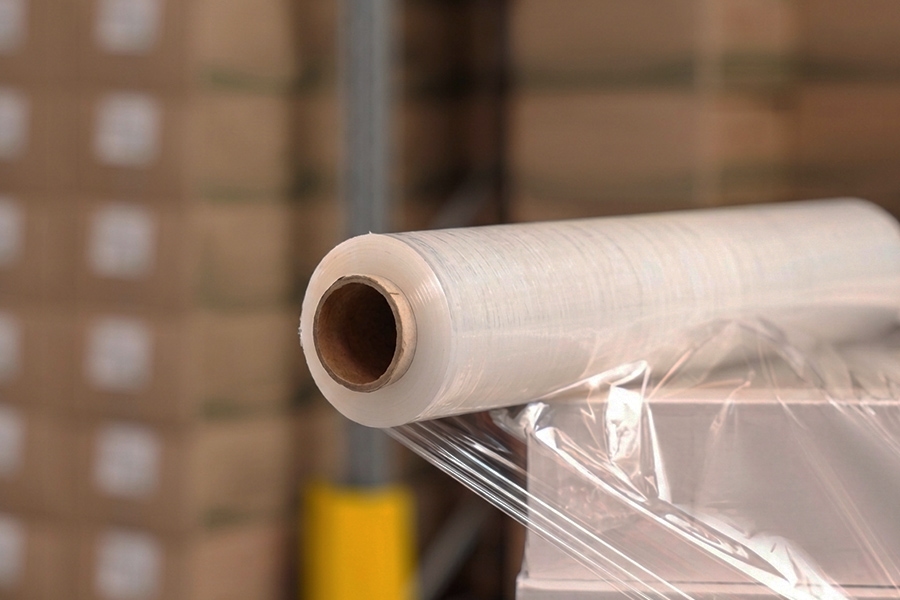
8. How to Choose the Right Stretch Film Supplier.
For importers, distributors, manufacturers, and packaging wholesalers, selecting a stretch film supplier involves more than comparing unit prices.
Before making a bulk order, take into account these six points.
1. Product specifications.
Verify film width, thickness, roll length, roll weight, core dimensions, and all other pertinent specifications.
2. Application requirements.
Indicate whether the film will be used for hand wrapping, machine wrapping, small item bundling or heavy pallet loads.
3. Performance consistency.
Ask for samples and test for stretch, puncture resistance, cling and load stability in your actual operating conditions.
4. Customization options.
In case of requirements for specific dimensions, packaging configurations or private-label packaging, check the options and minimum order quantities.
5. Production and delivery capability.
Enquire about production lead times, quality-control processes, sample approval process and if the supplier can handle repeat orders.
6. Total packaging cost.
Evaluate the cost per securely wrapped pallet, not just the price per roll. A film that uses less material while maintaining dependable load stability may offer a better overall value.
KRYTAPE works with business customers looking for functional packaging material solutions. Buyers should confirm the available stretch film specifications, customization options, and order requirements directly with the company before ordering.
9. Stretch Film Selection for Different Packaging Needs.
Use the following guide as a starting point when discussing requirements with a stretch film supplier.
| Packaging requirement | Suggested option |
|---|---|
| Low-volume manual wrapping | Hand stretch film |
| High-volume pallet wrapping | Machine stretch film |
| Visibility of carton labels | Clear stretch film |
| Visual identification of shipments | Colored stretch film |
| Bundling small products | Mini stretch film |
| Heavy or irregular pallet loads | Film selected for suitable puncture resistance and load retention |
These are general recommendations. The final choice should be based on the load, film specifications, wrapping method, and actual test results.
10. FAQ.
Q:What is stretch film mainly used for?
R :Stretch film is primarily used to wrap and stabilize cartons, bundles, and pallet loads during storage, handling, and transportation.
Q:Are stretch wrap and pallet wrap the same thing?
A:In fact, in most industrial packaging applications, pallet wrap is the term used for the same product: stretch film that is used to wrap around palletized goods. The terms are often synonymous.
Q:Is stretch film water resistant?
R :Stretch film can offer some dust and incidental moisture protection, but it isn’t safe to assume that the goods will be moisture-free. However, regular stretch film is not inherently waterproof so it should not be relied on as a total moisture barrier.
Q:Can stretch film be used without a machine?
A:Yes. Hand stretch film is manufactured for manual use and is ideal for small operations or facilities that have no pallet wrapping machinery.
Q:What is the difference between hand stretch film and machine stretch film?
A:Hand stretch wrap is used for manual handling and is not intended was a use with any machinery whereas machine stretch is designed to be used with specific wrapping equipment. Both should be selected after considering the requirements of the application and the environmental conditions.
Q:How can I reduce stretch film consumption?
A:Select a proper film specification, use uniform wrapping patterns, adjust machine settings for transmission if possible, and reduce for avoid overlapping or extra film amounts. Any minder in film consumption must also be tested from a load stability standpoint.
Q:Can stretch film be customized for wholesale orders?
A:Stretch Film can be customized (length, thickness, roll configuration, color packaging) based on the supplier’s capabilities. Buyers to confirm options, MOQ, lead times with KRYTAPE.
Conclusion: Find the Right Stretch Film for Your Packaging Operations.
Stretch film is a versatile method of pallet load containment, warehouse order consolidation and outer packagings transit security. The decision on the type of film to required is a trade of film strength, stretch performance, roll size, packing speed, and material cost.
For operations that need hand stretch film for flexible packaging or machine stretch film for high-volume pallet wrapping, conducting real-world testing is an essential part of ensuring dependable performance.
Looking for a stretch film solution for your business?
Get in touch with KRYTAPE to talk your packaging needs, request for product details and to reconfirm specifications best suited for your application.
Website: https://krytape.com/stretch-film/
Vous recherchez des devis pour l'achat en gros de ruban adhésif personnalisé ?
Bénéficiez dès aujourd'hui de tarifs directs d'usine, de maquettes numériques gratuites et de quantités minimales de commande réduites pour votre entreprise.
Demandez un devis gratuit et un échantillon →